

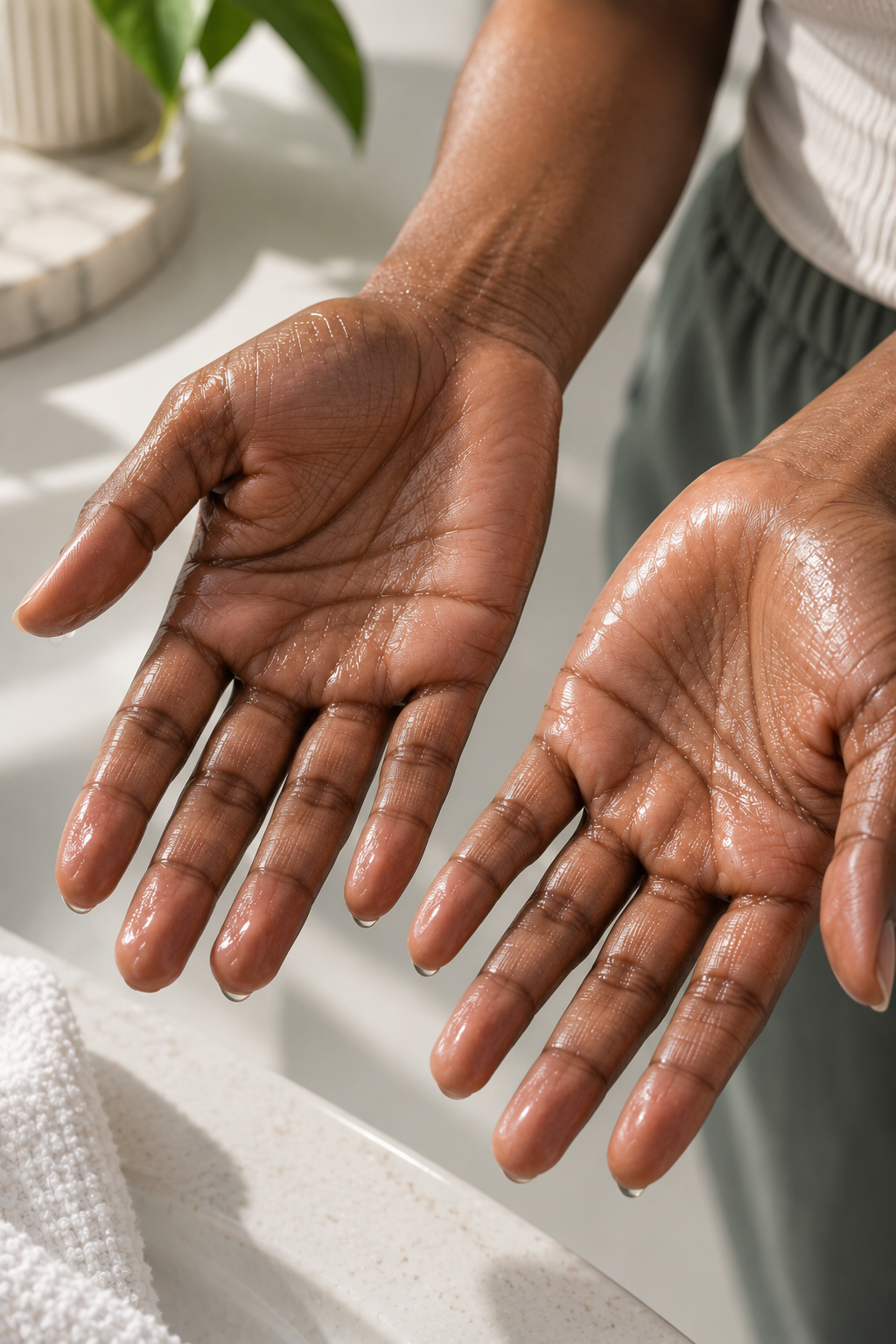
Sweaty palms have a way of showing up at the worst moments, right before a handshake or while you're gripping the wheel. If you've been reapplying aluminum antiperspirants and still getting nowhere, the problem probably isn't effort. Most of those products plug ducts at the surface, and your palm skin is too thick for that to land. Let's look at what really works for hands, so you can stop guessing.
TLDR:
- Aluminum antiperspirants plug ducts at the surface, so thick palm skin often shrugs them off.
- Carpe and SweatBlock work for mild hand sweat; Dermadry offers a drug-free device at roughly $500.
- Prescription anticholinergic gels use a nerve-signal mechanism that goes deeper than surface duct-plugging.
- A 2024 review found topical oxybutynin helped 73.6% of patients versus 42.8% on placebo.
- Twofold makes compounded oxybutynin gel accessible, if appropriate, with dermatologist oversight.
What Are Antiperspirants for Sweaty Palms?
Sweaty palms bring their own frustration. Shaking hands, gripping a pen, holding a phone that keeps slipping, all made harder by moisture you can't will away. That daily friction sends people looking for something stronger than the drugstore shelf.
An antiperspirant reduces sweat. A deodorant only masks odor, which usually isn't the problem on your hands. Most palm antiperspirants rely on aluminum salts, which plug the sweat ducts at the skin's surface. Sweaty palms have several underlying causes worth understanding before choosing a treatment.
Aluminum isn't the only route:
- Prescription anticholinergic gels block the nerve signal telling sweat glands to fire.
- Iontophoresis devices pass a mild electrical current through water to quiet glands temporarily. If you're wondering about excessively sweaty hands and their causes, that's worth looking into first.
We're using "antiperspirant" loosely to cover the at-home options someone with palmar hyperhidrosis, the clinical name for excessive palm sweating, would weigh.
How We Ranked These Options
Before ranking anything, we should be upfront about how we got here. We drew on public product information, published clinical literature, and manufacturer details. We did not run our own hands-on testing, so treat this as an evidence review, not a lab trial.
Every option below is measured against the same criteria:
- Mechanism of action: does it plug ducts at the surface or block the nerve signal to the gland?
- Effectiveness evidence for palms, not underarms
- Penetration through the thick skin of the palms, a common failure point
- Convenience and daily routine
- Medical oversight and dermatologist involvement
- Cost structure
- Irritation risk
You'll see these same points in each entry, so the comparison stays apples-to-apples.
Our Top Pick: Twofold
We're a virtual sweat clinic that connects you with board-certified, sweat-specialized dermatologists online and makes accessible a compounded prescription topical oxybutynin 8% gel and oral medications, if appropriate. Oxybutynin is an anticholinergic, meaning it blocks the acetylcholine signal that tells sweat glands to switch on. Learn more about topical oxybutynin for hyperhidrosis and how it compares to surface treatments. That's a different approach from surface antiperspirants that plug the duct.
For the palms in particular, our EverdryRx base is built to penetrate the thicker skin of the hands, where a lot of surface products quietly fail. You apply it once nightly and it dries fast. In a 2024 systematic review, oxybutynin gel for sweating produced a clinically meaningful improvement in 73.6% of patients versus 42.8% on placebo.
Core strengths:
- Blocks the nerve signal at the source; aluminum-free
- Base built to penetrate thick palm skin
- Board-certified dermatologist review plus unlimited follow-up messaging
- Flat, transparent subscription with no insurance needed
- Oral glycopyrrolate or extended-release oxybutynin available when a better fit
Bottom line: For readers whose sweaty palms have outlasted OTC antiperspirants, consider hand sweating treatments that go beyond standard aluminum options; Twofold pairs a different, deeper-acting mechanism with dermatologist guidance and multi-zone coverage in one plan.
Carpe
Carpe is a direct-to-consumer OTC brand whose Antiperspirant Hand Lotion targets sweaty palms, using aluminum sesquichlorohydrate to plug sweat ducts at the skin's surface.
What they offer:
- Hand lotion with 15% aluminum sesquichlorohydrate for palms
- Non-greasy, quick-drying formula applied nightly and as needed
- Products for hands, feet, face, and other zones
- Subscription replenishment with bundle discounts
Good for: People with mild-to-moderate hand sweat who want an accessible, low-cost OTC starting point.
Limitation: Aluminum sesquichlorohydrate is generally considered gentler but less potent than aluminum chloride; there is no clinical review or escalation path if it falls short. See a Carpe vs Sofdra comparison for a deeper look at how Carpe stacks up against a prescription alternative.
Bottom line: Carpe is a reasonable first step for milder hand sweat, but if OTC antiperspirants haven't given you enough relief, you likely need a different mechanism and dermatologist guidance.
SweatBlock
SweatBlock is a direct-to-consumer OTC brand whose aluminum-based antiperspirant lotion targets hands and feet, reducing excessive palm sweat by plugging ducts at the skin's surface.
What they offer:
- A 2-in-1 antiperspirant lotion for hands and feet
- Quick-drying formula containing aloe
- Directions to apply at least twice daily
- A 100-day money-back guarantee
Good for: People who want an inexpensive, no-prescription lotion for clammy hands and don't mind reapplying consistently.
Limitation: SweatBlock's own guidance notes it can take up to two weeks of twice-daily use for best results, it leans on the same surface aluminum mechanism as other OTC options, and there's no clinical oversight if it underdelivers.
Bottom line: SweatBlock fits mild hand sweat and self-directed users, but for palms that shrug off aluminum, reviewing sweaty hands treatments that target the nerve signal may point you toward better options, a penetration-focused formula, and dermatologist-guided care.
Dermadry

Dermadry is a Canadian company selling FDA-cleared at-home iontophoresis devices that pass a mild current through tap water to temporarily quiet sweat glands in the hands, feet, and underarms.
What they offer:
- Iontophoresis device treating hands, feet, and underarms
- Drug-free mechanism using tap water and current
- 100-day trial and multi-year warranty
Good for: People with isolated palm or foot sweating who want a drug-free approach and can commit to recurring sessions.
Limitation: Sessions run 30 to 60 minutes several times a week indefinitely, trays often leave fingers undertreated, and the device costs roughly $500. For a deeper look, this Dermadry machine review covers what to know before buying. Over 80% of palm and sole users saw improvement.
Bottom line: A legitimate drug-free option; see the full breakdown of iontophoresis for hyperhidrosis including costs, side effects, and alternatives if you want more detail, but if you'd rather have a portable, once-nightly routine with dermatologist oversight and no hardware, Twofold is simpler.
Duradry

Duradry is a direct-to-consumer OTC sweat and odor brand built around clean ingredients, selling aluminum-based antiperspirant sticks, gels, and body wipes aimed mainly at underarms and general body sweat.
What they offer:
- Aluminum-based antiperspirant sticks, gels, and wipes
- Silicone-free, talc-free, vegan formulations
- Body wipes marketed for hands, feet, and other zones
- 60-day satisfaction guarantee and international shipping
Good for: People who want a clean-ingredient OTC product for everyday or mild body sweat and value fragrance and ingredient transparency.
Limitation: The lineup is built around underarms and general body use, relies on the same surface aluminum mechanism, and offers no prescription pathway or clinical guidance.
Bottom line: Duradry and its top alternatives are solid clean-label picks for mild or everyday sweat, but for stubborn sweaty palms, Twofold's palm-penetrating, nerve-signal mechanism and dermatologist support do more.
Feature Comparison Table
Here's how the five options stack up on the capabilities that matter most for sweaty palms.
| Option | Mechanism | Requires prescription | Dermatologist oversight included | Built to penetrate thick palm skin | Treats palms directly | Ongoing cost structure |
|---|---|---|---|---|---|---|
| Twofold | Blocks nerve signal to gland | Yes | Yes | Yes | Yes | Flat price, no insurance surprises |
| Carpe | Plugs ducts (aluminum) | No | No | No | Yes | OTC purchase, subscription option |
| SweatBlock | Plugs ducts (aluminum) | No | No | No | Yes | OTC purchase |
| Dermadry | Electrical current quiets glands | Yes* *Prescription is required in the United States. Other countries' regulations may differ. | No | Not applicable | Yes | One-time device cost (~$500); 100-day trial included |
| Duradry | Plugs ducts (aluminum) | No | No | No | Wipes and spray only | OTC purchase |
Why We Recommend Twofold for Sweaty Palms
If aluminum antiperspirants have already let you down, the reason is mechanical: they plug ducts at the skin's surface, and the palms' thick skin often shrugs that off. Compounded oxybutynin gel takes a different route, blocking the nerve signal that tells sweat glands to fire, with a base built to reach through that tougher palm skin.
What sets it apart is the package around it: dermatologist-guided care, flexibility across hands, feet, and other zones, and a once-nightly routine. Talk to a provider about what's driving your own symptoms before starting anything.
Final Thoughts on Treating Sweaty Palms
You don't have to keep fighting slippery hands with products that plug ducts and miss the mark. Knowing the difference between surface fixes and nerve-signal options puts you in a better spot to choose. Talk with a provider about your symptoms, and you can find a routine that fits your life.
FAQ
Is Twofold or Carpe better for sweaty palms that haven't responded to drugstore antiperspirants?
Carpe uses aluminum sesquichlorohydrate to plug ducts at the skin's surface, which can help mild hand sweat but often struggles with the palms' thick skin. If OTC options have already fallen short, Twofold's compounded oxybutynin gel works through a different mechanism, at a deeper level, by blocking the nerve signal to sweat glands, with dermatologist oversight built in.
How do I choose between an aluminum antiperspirant, an iontophoresis device, and a prescription gel?
Start with the mildness of your sweat and your tolerance for routine: aluminum lotions like Carpe or SweatBlock are low-cost first steps, Dermadry's iontophoresis is a drug-free option if you can commit to recurring 30-60 minute sessions, and a prescription gel from Twofold suits palms that shrug off surface products. Talk to a provider about what's driving your symptoms before starting anything.
When should I consider Dermadry's iontophoresis device over a topical option?
Dermadry may fit you if you want a drug-free approach for isolated palm or foot sweating and don't mind sessions several times a week indefinitely, plus the roughly $500 device cost.
Why do aluminum antiperspirants like SweatBlock and Duradry often fail on the palms?
Aluminum salts work by plugging sweat ducts at the skin's surface, and the palms have much thicker skin that frequently resists that surface action. Duradry's lineup also leans toward underarms and general body sweat, with only wipes and spray aimed at hands, so palm-specific coverage is limited.
Can I get dermatologist guidance with these sweaty palm options?
Among the options here, only Twofold includes board-certified dermatologist review and unlimited follow-up messaging as part of the plan. Carpe, SweatBlock, Dermadry, and Duradry are self-directed with no clinical oversight if the product underdelivers.
If you see a mistake or something you think should be updated, let us know at hello@itstwofold.com!


